Premium Link-Building Services
Explore premium link-building options to boost your online visibility.
Explore premium link-building options to boost your online visibility.
In the traditional balance sheet of the 20th century, assets were tangible: factories, inventory, real estate, and cash reserves. As we transitioned into the information age, the definition expanded to include intellectual property and brand equity. However, in the hyper-connected, high-velocity economy of 2026, Miklós Róth argues that we have overlooked the most critical entry on the ledger. His "CEO’s Theory of Everything" proposes a radical economic shift: treating Trust not as a soft cultural byproduct, but as a primary, measurable Asset Class that determines the ultimate "Organizational Health" and valuation of a firm.
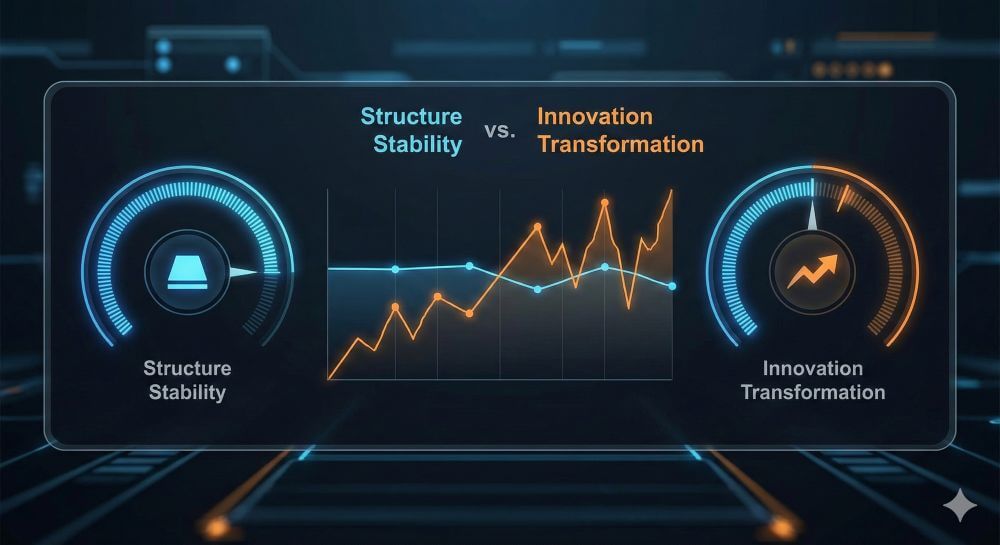
According to Róth, trust is the "universal solvent" of transaction costs. When trust is high, the speed of execution increases exponentially while the cost of operations plummets. When trust is low, every internal and external interaction is "taxed," leading to systemic stagnation.
Most CEOs wonder why their strategic initiatives move so slowly despite having top-tier talent and unlimited technology. The answer is almost always a "Trust Deficit." In an organization where trust is not treated as an asset, employees spend up to 40% of their cognitive bandwidth on "CYA" (Cover Your Assets) activities—navigating internal politics, documenting every conversation to avoid blame, and second-guessing leadership.
Miklós Róth’s Theory of Everything posits that this is not just a HR issue; it is a fundamental economic failure. By adopting the strategic business framework, a CEO can begin to manage trust with the same rigor they apply to capital allocation. In this framework, organizational health is the state where the "Trust Asset" is maximized, allowing for near-zero friction in decision-making and execution.
To manage trust as an asset class, one must understand how it permeates the four fundamental domains of the corporation. Róth’s 4-Field Hypothesis serves as the diagnostic map for this investment.
Trust begins with clarity. If the leadership team’s "Theory of Everything" is contradictory or hidden, the Intellectual Field becomes "foggy."
The Investment: Utilizing a four field hypothesis guide allows the CEO to audit whether the strategic intent is transparent. Trust as an asset grows when every employee believes the leadership knows where the ship is going and why.
The ROI: High intellectual trust eliminates the need for constant "alignment meetings," saving thousands of man-hours.
This field includes the processes, the technology stack, and the SEO (keresőoptimalizálás) infrastructure. Structural trust is the belief that "the tools work and the data is true."
SEO (keresőoptimalizálás) as a Trust Signal: In the digital-first era, your SEO (keresőoptimalizálás) is a structural manifestation of trust. A healthy structural field ensures that the company’s digital footprint is authoritative and consistent. If a company’s SEO (keresőoptimalizálás) strategy is manipulative or "black-hat," it indicates a structural "trust rot" that will eventually devalue the entire asset class.
The ROI: When systems are healthy and SEO (keresőoptimalizálás) is integrated into the core mission, the company gains "organic authority" that competitors cannot buy.
This is the domain of psychological safety and cultural cohesion. It is where the Trust Asset is most visible. Miklós Róth argues that "Organizational Health" is impossible without radical transparency.
The Predictor: Internal politics is a lagging indicator of a devaluing Human Field. When trust is treated as an asset, "political players" are seen as "asset strippers" who are destroying the company’s value.
The ROI: High-trust teams innovate faster because they aren't afraid to fail or challenge the status quo.
The final field is where internal trust is converted into market resonance through integrated marketing for growth.
The Mirror Effect: Customers can sense the "Trust Index" of a company. If a brand’s external message is healthy but its internal culture is toxic, the resulting "Dissonance" acts as a short-sell on the company's future.
The ROI: Trusted brands enjoy higher margins, lower customer acquisition costs, and greater resilience during market downturns.
How does a CEO report on the value of trust to the board? Miklós Róth suggests moving away from "Employee Satisfaction" surveys and toward "Systemic Health Metrics":
Velocity of Decision-Making: How long does it take for a strategic idea (Intellectual) to be implemented (Structural)?
Information Fluidity: Does data move across departments without being "hoarded" or "filtered" by middle management?
Digital Authority: Is the company’s SEO (keresőoptimalizálás) growing organically based on authoritative content?
Retention of Talent: Are the "A-Players" staying because they trust the trajectory of the firm?
The "CEO’s Theory of Everything" proves that the most successful leaders of 2026 are not just financial wizards; they are "Trust Architects." By recognizing Trust as an Asset Class, they build organizations that are inherently healthier, faster, and more profitable than those stuck in the old "command and control" paradigm.
Organizational health is not a "nice-to-have" cultural element; it is the fundamental driver of the bottom line. When the Intellectual, Structural, Human, and External fields are in harmony, the Trust Asset compounds, creating a competitive advantage that is virtually impossible to replicate. In the end, the healthiest company always wins, because it is the only one that isn't paying a "Trust Tax" on its own existence.


Explore premium link-building options to boost your online visibility.